
Access White County Civil Court Records
Civil court records in White County are kept by the Superior Court Clerk in Cleveland, Georgia. The clerk's office maintains filings for contract disputes, property claims, personal injury suits, judgment liens, and all other civil matters heard in White County Superior Court. You can search White County civil court records through the statewide GSCCCA portal or by reaching out to the clerk's office in Cleveland directly. This page covers what types of civil records exist in White County, how to find them online and in person, and what tools are available to help your search.
White County Quick Facts
White County Superior Court Clerk
The White County Superior Court Clerk in Cleveland is the official keeper of civil court records for this north Georgia county. The clerk accepts civil case filings, keeps the official docket, issues process on new suits, and stores all civil documents once they enter the court record. Under O.C.G.A. § 15-6-94, the Superior Court Clerk must accept and index all civil filings, keep them in proper order, and make them available to the public during normal business hours. The clerk's office in Cleveland is the starting point for any civil records search in White County.
The courthouse is in Cleveland, the county seat of White County. Office hours are Monday through Friday during standard business hours. Call ahead to confirm current hours before making the trip to Cleveland. The clerk's staff can help you locate a case by party name or case number, pull the physical file, and process requests for copies. Certified copies carry a higher fee than plain copies, and fees are set by state law and posted at the clerk's counter.
White County is part of the Blue Ridge Judicial Circuit, which also covers several other northeast Georgia counties including neighboring Towns County. The circuit's Superior Court judges rotate through the member counties on a set schedule. Hearing dates in White County depend on the Blue Ridge Circuit court calendar. If you need to know when the next court term is scheduled in Cleveland, the clerk's office can provide that information.
White County Superior Court does not have a standalone online case search portal. For recorded civil instruments, the GSCCCA statewide system is the primary online access tool available without visiting Cleveland.
Search White County Civil Records Online
The Georgia Superior Court Clerks' Cooperative Authority provides the main online search tool for civil court records in all 159 Georgia counties. The GSCCCA search portal at gsccca.org indexes recorded instruments from every county, including White. You can search by grantor or grantee name, book and page, or date range. The portal covers real property records, civil judgment liens, security deeds, UCC filings, and other instruments once recorded in Cleveland. Active litigation dockets are not displayed in full, but final judgments appear in the system after they are recorded with the clerk.
The GSCCCA homepage shown below is where you start when searching White County civil records online.
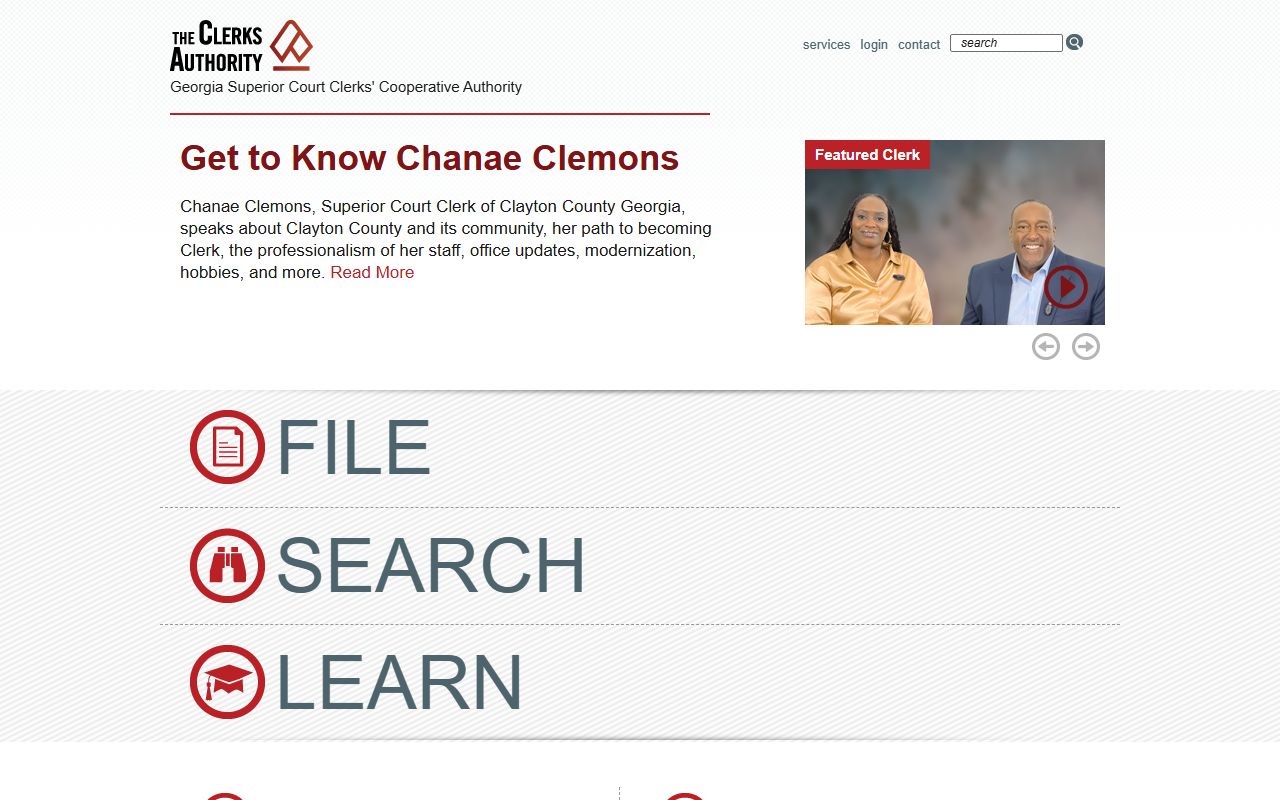
The GSCCCA system covers all 159 Georgia counties, so White County civil judgment records and property instruments are accessible through this portal without a trip to Cleveland.
For active civil case dockets and filings not yet producing a recorded judgment, contact the White County Superior Court Clerk directly. Staff can search the case management system and provide docket information by phone or in person. Have the full legal name of any party you are searching, along with any case number you already have, before you call or go to the courthouse in Cleveland.
FANS Alerts and eCertification for White County
The FANS fraud alert service at fans.gsccca.org lets White County property owners register their names and receive email alerts when a document is recorded against their property. This service is free and covers all document types filed with the White County Superior Court Clerk, including civil judgment liens and deed recordings. Given the level of real estate activity in the north Georgia mountains, monitoring property recordings through FANS is a smart step for White County property owners.
The eCertification portal shown below allows White County residents to order certified copies of recorded instruments online without making a trip to Cleveland.
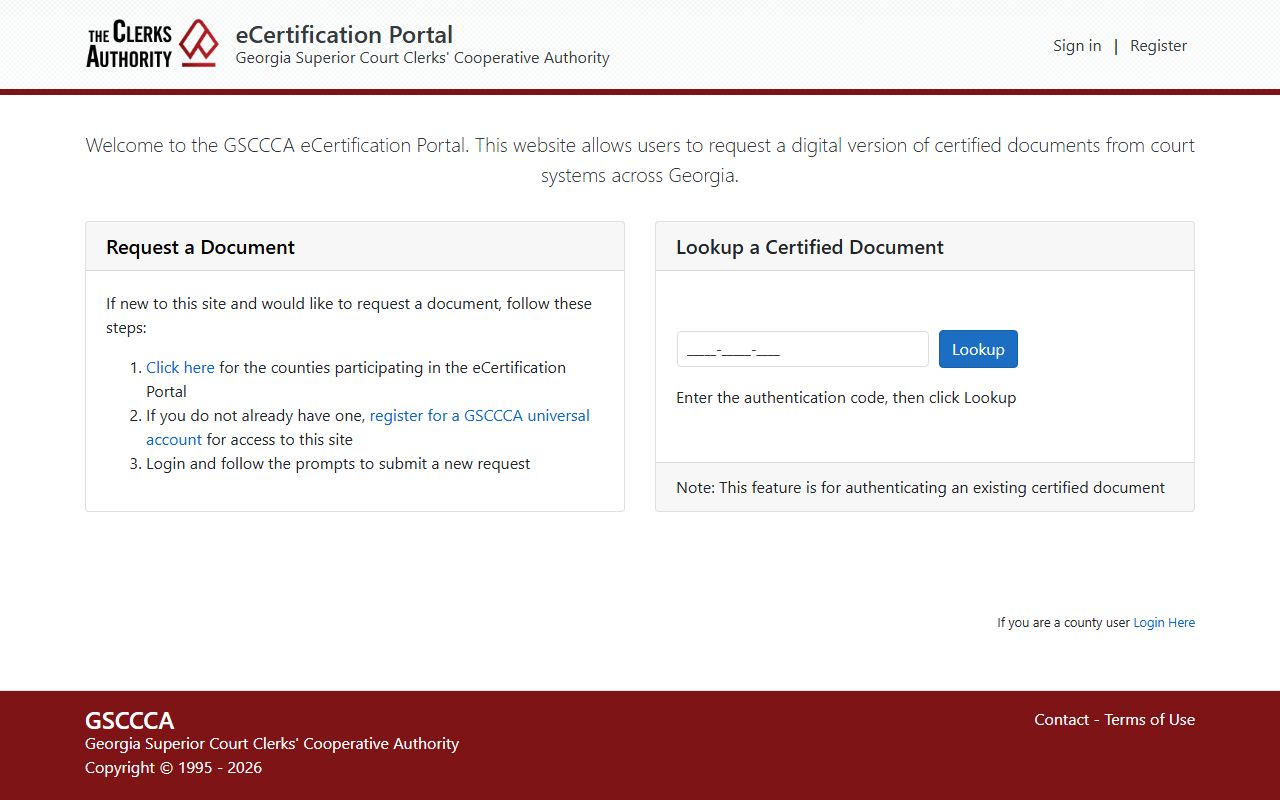
The GSCCCA eCertification portal lets you order certified copies of recorded instruments from White County online, which is useful when you need certified judgment records for legal proceedings elsewhere.
For certified copies of civil case documents that are not recorded instruments (such as a court order or a filed motion), you will need to visit the clerk's office in Cleveland or submit a written request by mail. The clerk's staff can tell you the current fee schedule and turnaround time for copy requests. Fees are set by state law, and certified copies cost more than uncertified plain copies.
Georgia Open Records Law and Civil Access in White County
Access to civil court records in White County follows Georgia's Open Records Act under O.C.G.A. § 50-18-70. This law makes most civil court filings public records that any person may request and inspect. The clerk's office in Cleveland must respond to a public records request within three business days, either providing the records or explaining why they cannot be released. Records sealed by a judge or those involving protected parties such as minors are withheld under specific exceptions in the law.
Civil cases in White County Superior Court include contract disputes, personal injury claims, property disagreements, breach of warranty suits, and enforcement of civil judgments. The county's location in the north Georgia mountains means property boundary and easement disputes, as well as real estate matters involving vacation and recreational land, appear in the civil docket with some frequency. Each case produces a set of documents indexed by party name and case number at the clerk's office in Cleveland.
If a record does not appear in the public index, it may have been sealed by the court or may fall under a statutory exception. Ask the clerk's staff whether a case is sealed or requires a court order to access.
Types of Civil Records Available in White County
The White County Superior Court Clerk in Cleveland maintains a complete set of civil court records covering all matters within Superior Court jurisdiction. Knowing the types of records available helps you ask for the right document when searching civil records in this county.
Contract and commercial disputes are a routine category of civil filing in White County. When one party claims another failed to honor the terms of a contract, they file a civil complaint in Superior Court. The clerk assigns a case number and indexes the filing under the party names. Everything filed after that point, including motions, responses, and court orders, becomes part of the public civil record in Cleveland.
Property disputes are common in White County given the volume of real estate transactions in this part of north Georgia. Quiet title actions, boundary disputes, easement conflicts, and deed disagreements are all filed in White County Superior Court when the land at issue sits within the county lines. These cases often include surveys, historic deeds, and plat maps as exhibits in the court file.
Civil judgment liens are one of the most searched record types in any county. Once a judge enters a final civil judgment in White County Superior Court, the winning party can record it with the clerk. The recorded judgment creates a lien against real property in the county and appears in the GSCCCA database under the debtor's name. Any title search for White County property should include a GSCCCA judgment search to check for recorded civil liens.
Personal injury and tort suits come to White County Superior Court when the amount at issue exceeds the threshold for State or Magistrate Court. These cases produce a file that includes the original complaint, motions from both sides, court orders, and the final judgment. All of these documents are indexed by the clerk and available for public inspection under the Open Records Act.
UCC financing statements recorded with the White County clerk also appear in the GSCCCA system. These records are relevant for commercial lending and business transactions involving secured personal property. If you are researching a business or commercial transaction with a White County party, a UCC search through GSCCCA should be part of your complete civil records review.
Additional Resources for White County Civil Searches
For civil cases that cross county lines or involve parties in more than one Georgia county, running name searches across neighboring Blue Ridge Circuit counties through GSCCCA is the most efficient approach. White County shares the Blue Ridge Circuit with Towns County (directly to the north) and other nearby counties. If a dispute involves land or parties in multiple northeast Georgia counties, run separate GSCCCA searches for each county where a recording may have been made.
For civil matters involving federal claims or parties in multiple states, the Northern District of Georgia federal court covers White County. Federal civil records are separate from the White County Superior Court docket and are searchable through PACER at pacer.gov. A PACER account is required. Most civil disputes in White County are handled entirely in state Superior Court and appear only in the clerk's records in Cleveland and the GSCCCA system.
Georgia Legal Services Program provides civil legal assistance to income-qualifying individuals in rural Georgia counties, including White County. If you need help with a civil court matter in Cleveland and cannot afford a private attorney, Georgia Legal Services may be able to assist. The Georgia State Bar's lawyer referral service at gabar.org can also connect you with a licensed attorney who handles civil matters in the Blue Ridge Circuit.
Nearby Counties
Civil cases must be filed in the county where the defendant lives or where the dispute arose. Check these neighboring county records if you are unsure which court has jurisdiction.