
Find Georgia Civil Court Records
Georgia civil court records are public documents kept by Superior Court Clerks in each of the state's 159 counties. These records cover lawsuits, contract disputes, personal injury cases, small claims, and other civil matters filed in court. You can search civil court records in Georgia online through statewide systems, at the local courthouse, or by mail. The Georgia Superior Court Clerks' Cooperative Authority coordinates records access across all counties. This guide covers the main ways to find, access, and get copies of Georgia civil court records.
Georgia Civil Court Records Quick Facts
Georgia Civil Court Records: The GSCCCA
The Georgia Superior Court Clerks' Cooperative Authority, known as the GSCCCA, is the central hub for civil court records in Georgia. It works with all 159 county Superior Court Clerks to provide statewide access to records and related documents. The GSCCCA is based at 1875 Century Boulevard, Suite 100, Atlanta, GA 30345. You can reach them at (404) 327-9058 or toll-free at (800) 304-5175. Technical help is available Monday through Friday, 7:30am to 6:00pm EST. Email support goes to Help@gsccca.org.
The GSCCCA website is the primary gateway for searching civil court records and related documents across Georgia's 159 counties.
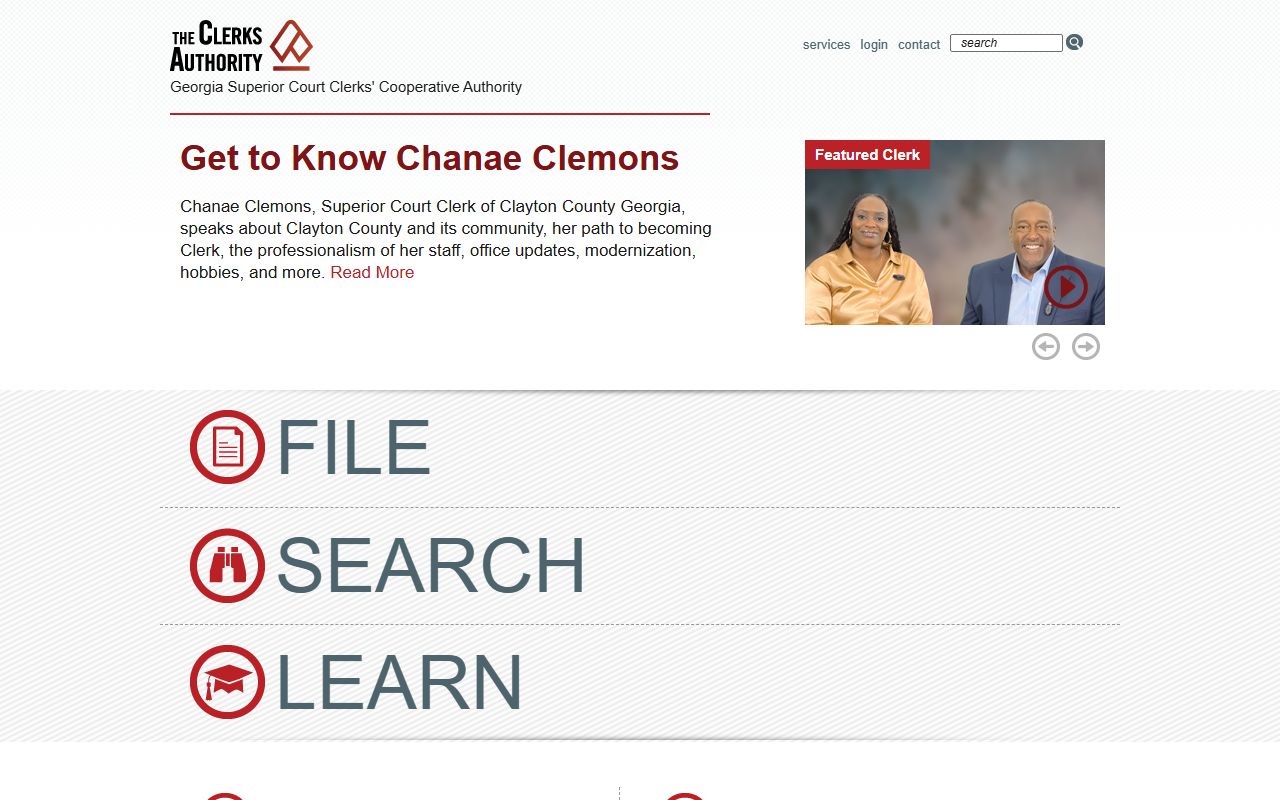
From this portal, users can access UCC filings, real estate indexes, lien records, plats, and notary information for all Georgia counties. The GSCCCA plays a key role in how civil court records move through the system.
The search portal at gsccca.org/search offers several types of searches depending on what you need. Premium accounts run $29.95 per month per user. Regular accounts cost $14.95 per month. Both plans charge $0.50 per printed page. UCC certified searches are $15.00 per debtor name. These rates took effect on July 1, 2025.
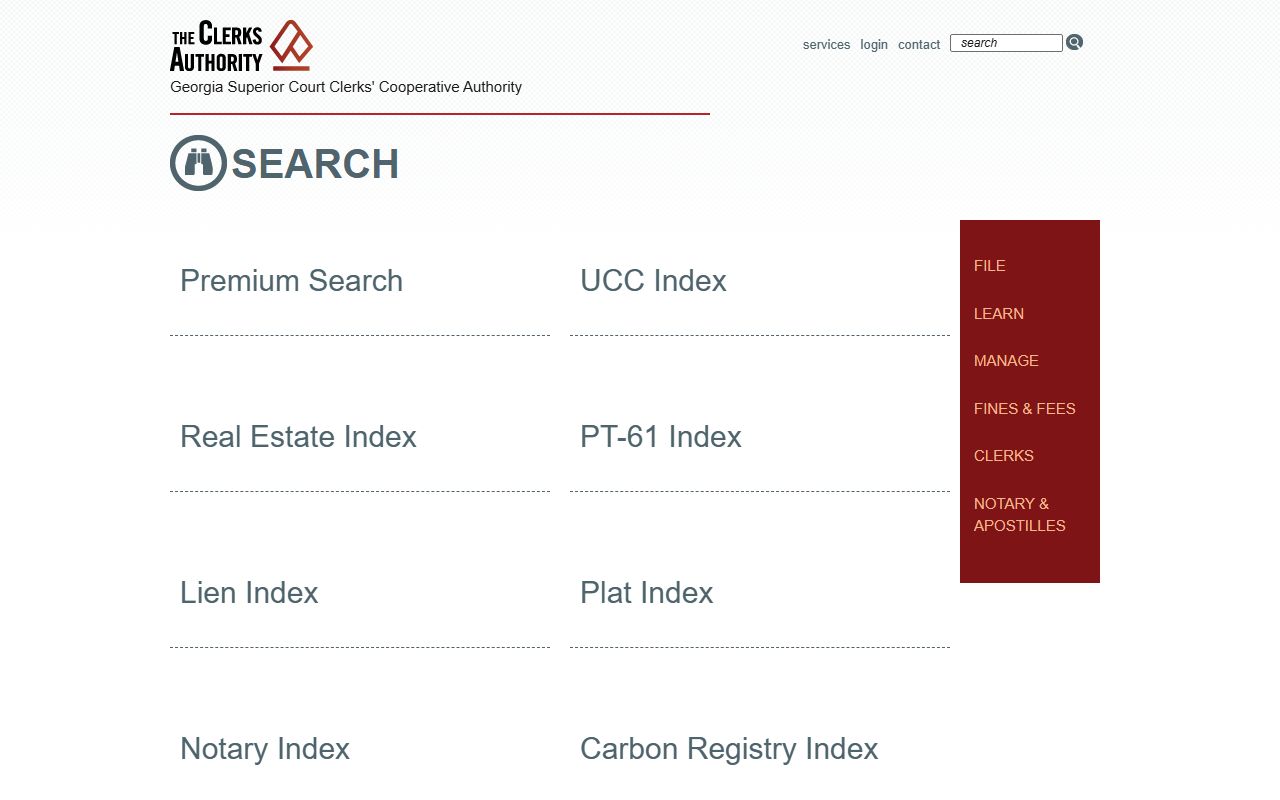
From the search portal you can run a Premium Search, UCC Index search, Real Estate Index search, Lien Index search, Plat Index search, Notary Index search, and more. Each tool targets a different type of civil record in Georgia.
The full list of GSCCCA services is at gsccca.org/services.
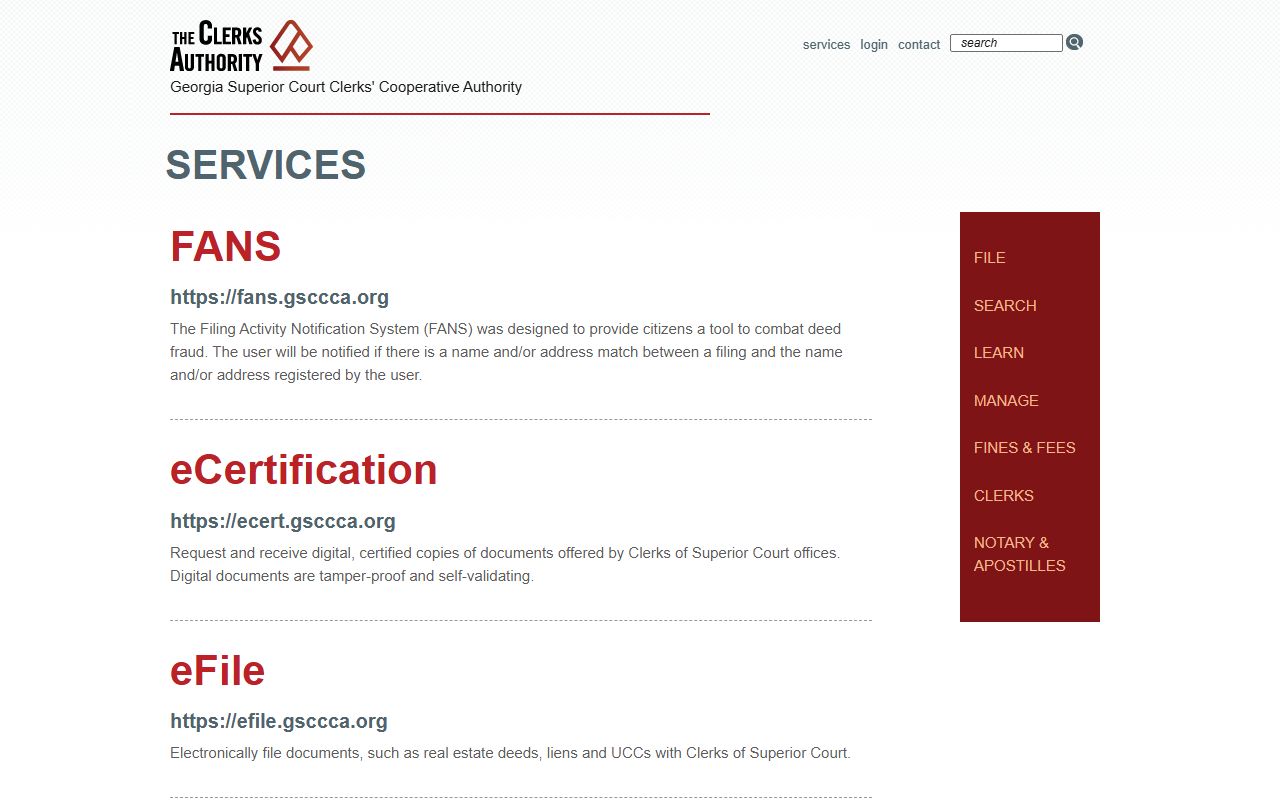
This page walks through every tool the GSCCCA offers, from search services to e-filing to notification systems.
E-File Georgia Civil Court Documents
Georgia courts use two main e-filing systems for civil cases. Odyssey eFileGA is one of them. It lets attorneys, self-represented litigants, and government agencies submit court documents online to any participating court in Georgia. The system works 24 hours a day, seven days a week, 365 days a year. No special software is needed. All you need is internet access and a browser. Filing fees are calculated automatically, and email updates notify you when the clerk acts on your submission.
The Odyssey eFileGA homepage explains how the system works and who can register.
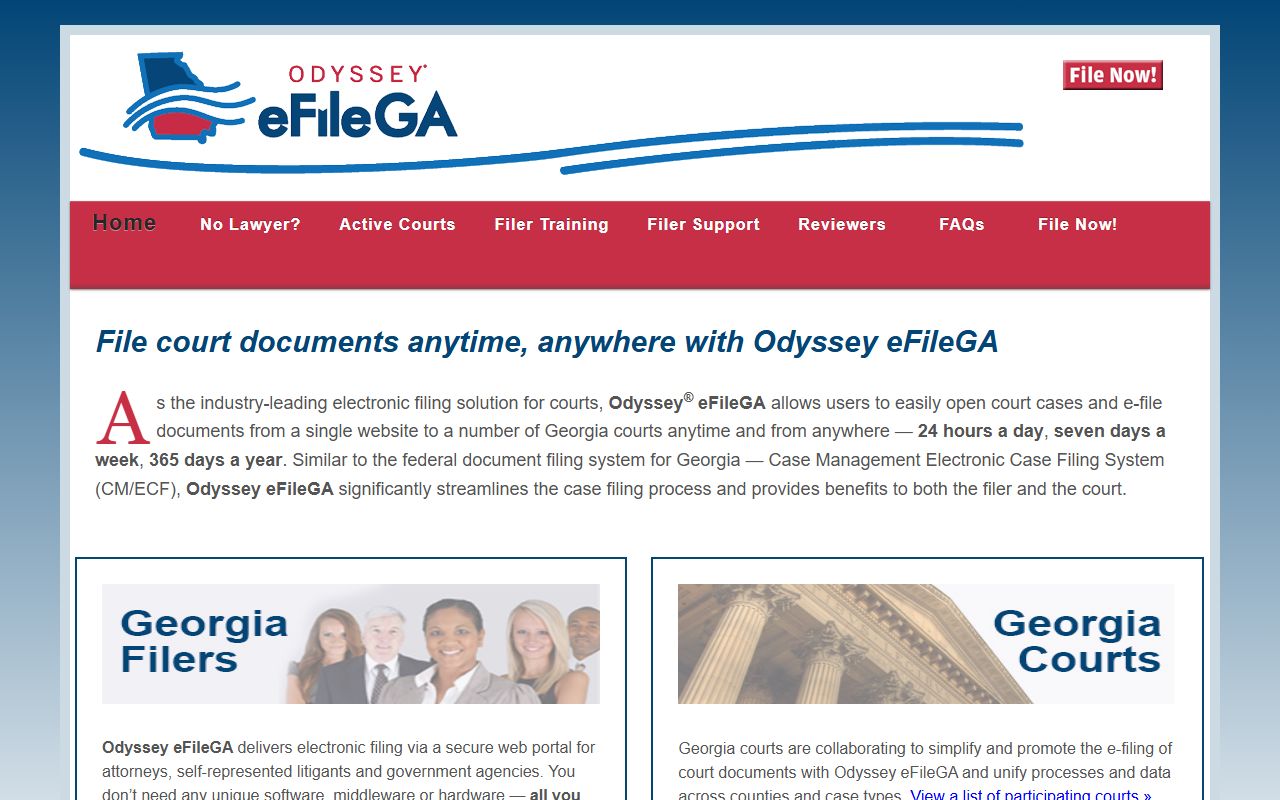
Any member of the Georgia State Bar can register for free. Pro se parties and government agencies may also use the system to file civil cases.
To start filing, go directly to the eFileGA portal. This is where you submit civil documents to participating courts in Georgia.
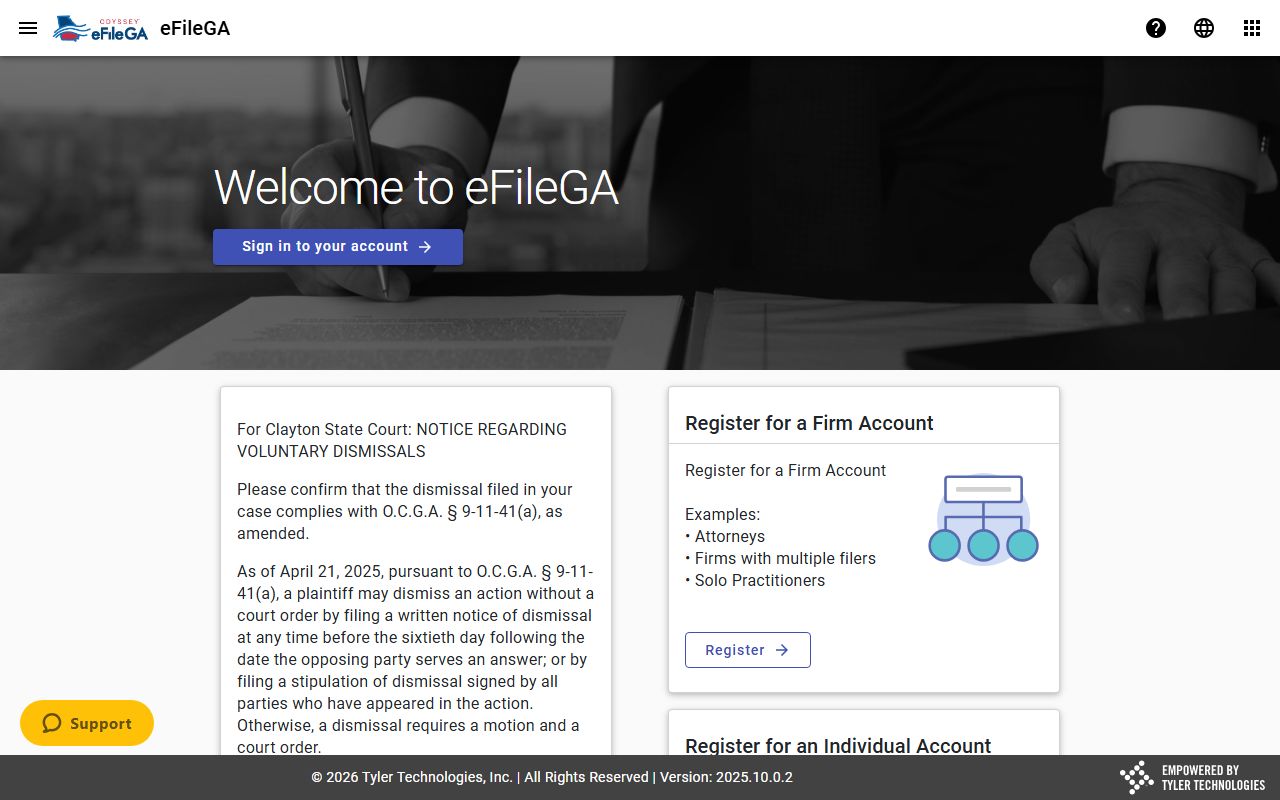
Once the clerk accepts your filing, file-stamped copies become available through the portal. You can also track submission status from the same dashboard.
Have questions about e-filing? The eFileGA FAQs page covers the most common issues filers run into.
Online training webinars are available through the eFileGA system and are approved for CLE credit. Filer support is also at odysseyfileandserve.zendesk.com.
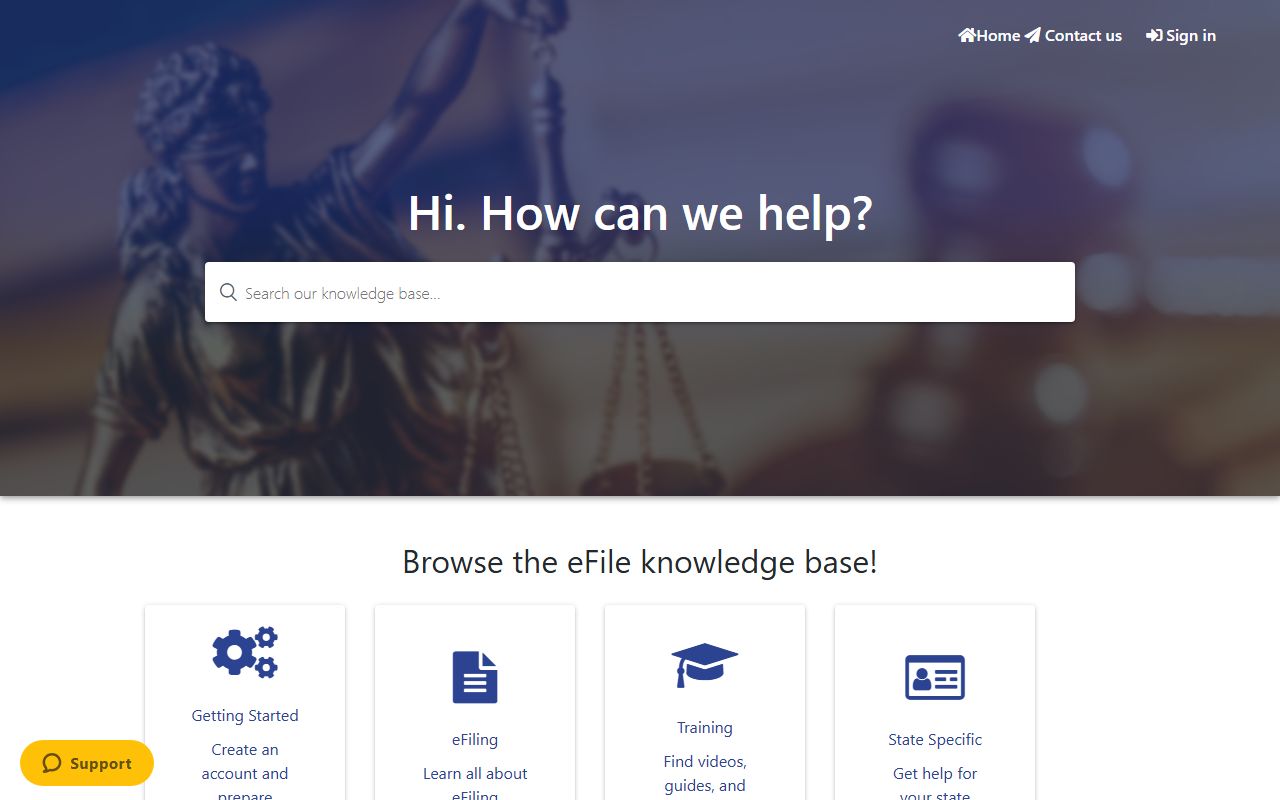
You can submit help tickets through the Zendesk support portal and search a library of help articles about specific filing situations.
The GSCCCA also has its own e-filing portal at efile.gsccca.org for UCC documents, real estate filings, liens, and plats. It runs 24/7. A full overview of GSCCCA e-filing options is at gsccca.org/file/efiling/overview.
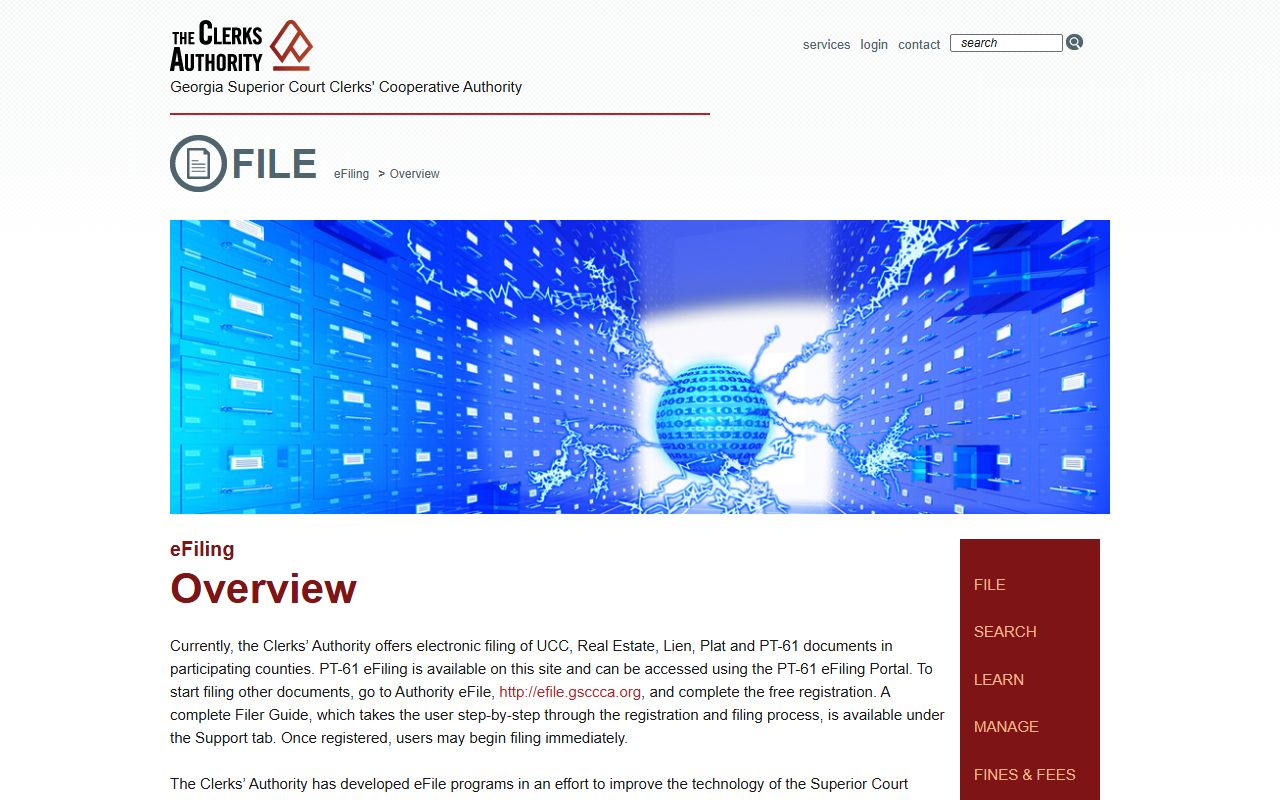
The GSCCCA eFiling portal itself can be accessed at efile.gsccca.org.
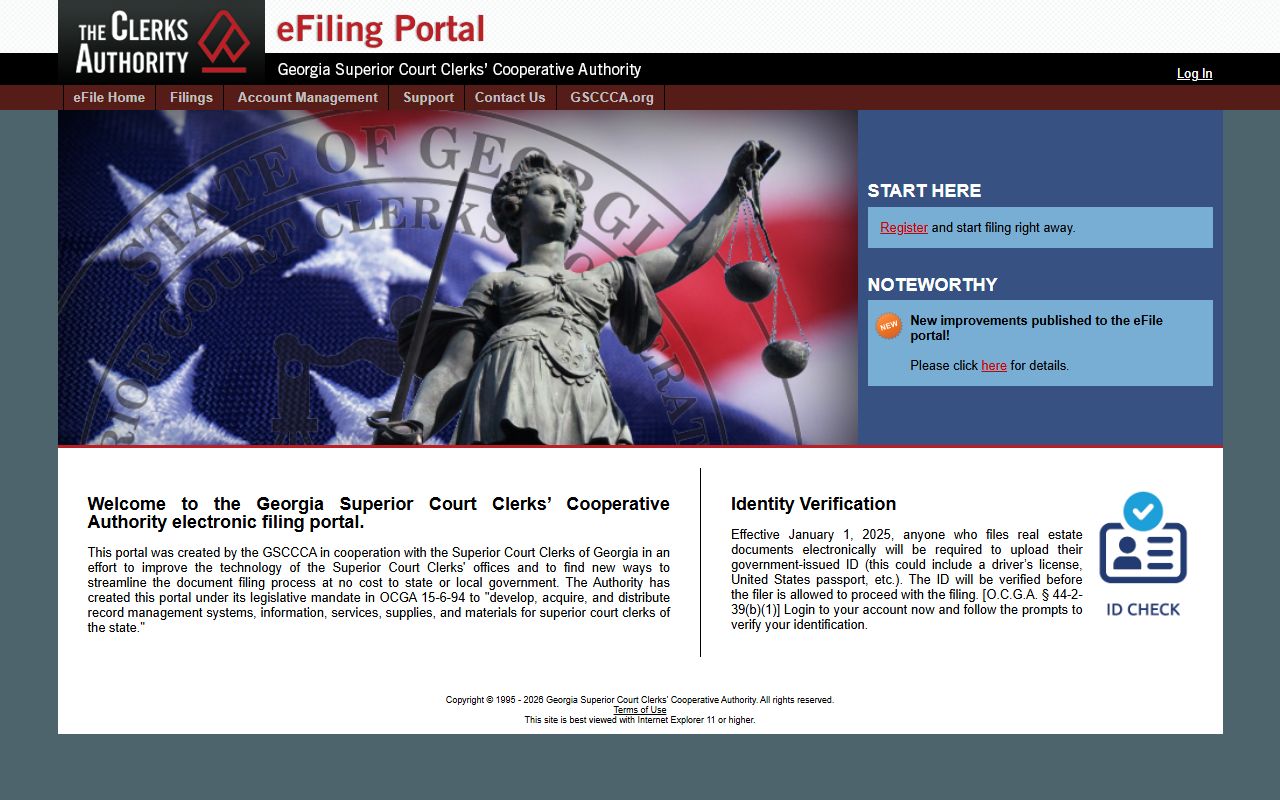
This portal handles filings separately from Odyssey eFileGA and is designed primarily for real estate and lien document types.
Multi-County Georgia Civil Case Search
re:SearchGA lets you search case information and court documents across 25 Georgia counties from a single website. Free document access is available for attorneys of record and pro se parties who file electronically. The system is built on the Tyler Technologies platform. You can search by name, case number, attorney, or judge. It also supports in-document text searching and case alerts.
The re:SearchGA homepage is your starting point for cross-county civil case searches in Georgia.
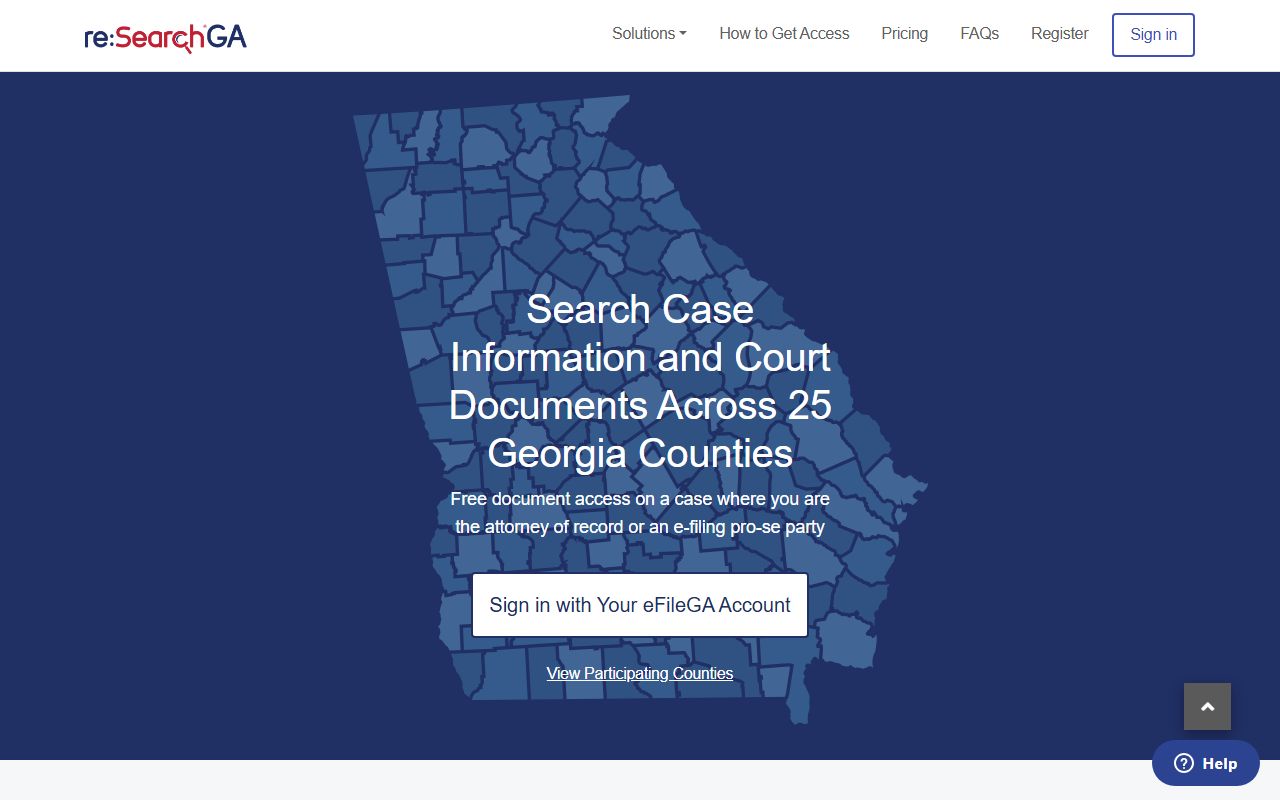
The 25 participating counties are Bibb, Bryan, Chatham, Cherokee, Clayton, Coweta, Decatur, DeKalb, Douglas, Elbert, Effingham, Floyd, Forsyth, Fulton, Glynn, Gwinnett, Houston, Lowndes, Muscogee, Pickens, Pierce, Rockdale, Screven, Spalding, and Washington. If your civil case was filed in one of these counties, re:SearchGA is often the fastest way to find it. For help, email research.support@tylertech.com or call (844) 307-8720.
Monitor Georgia Civil Record Filings
The GSCCCA offers a free notification service called FANS, short for Filing Activity Notification System. Register your name or address and the system will alert you when a matching civil court filing appears. FANS covers all 159 Georgia counties. It was built to combat deed fraud, but it works for anyone tracking civil record activity tied to their name or property in Georgia.
Sign up for free at fans.gsccca.org.
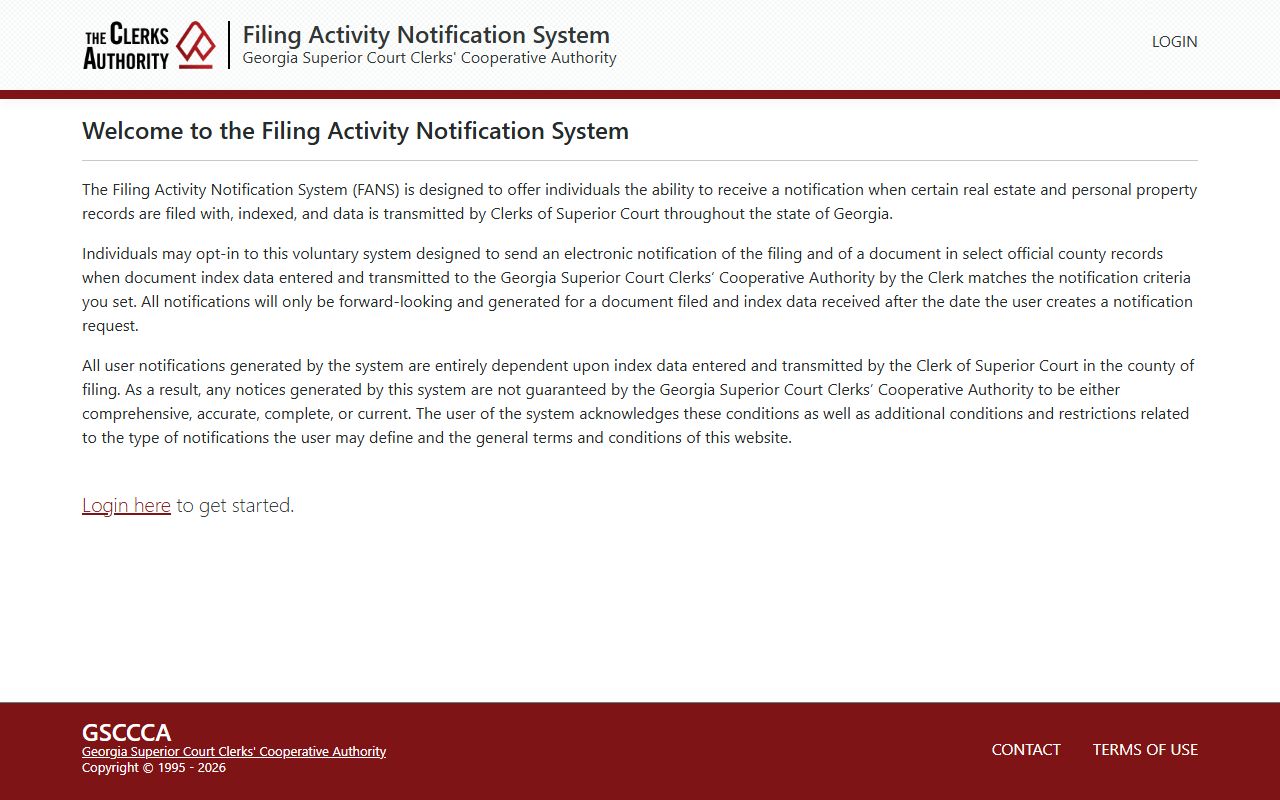
FANS sends notifications when real estate records or personal property records match your registered information. There is no cost to use this service.
Get Certified Copies of Georgia Civil Records
The GSCCCA runs an eCertification portal that lets you order certified copies of civil court records online. Digital certified copies are tamper-proof and self-validating. They carry the same legal weight as paper certified copies from the courthouse. Pay by debit or credit card and receive your documents without a trip to the clerk's office in Georgia.
Request certified civil court records at ecert.gsccca.org.
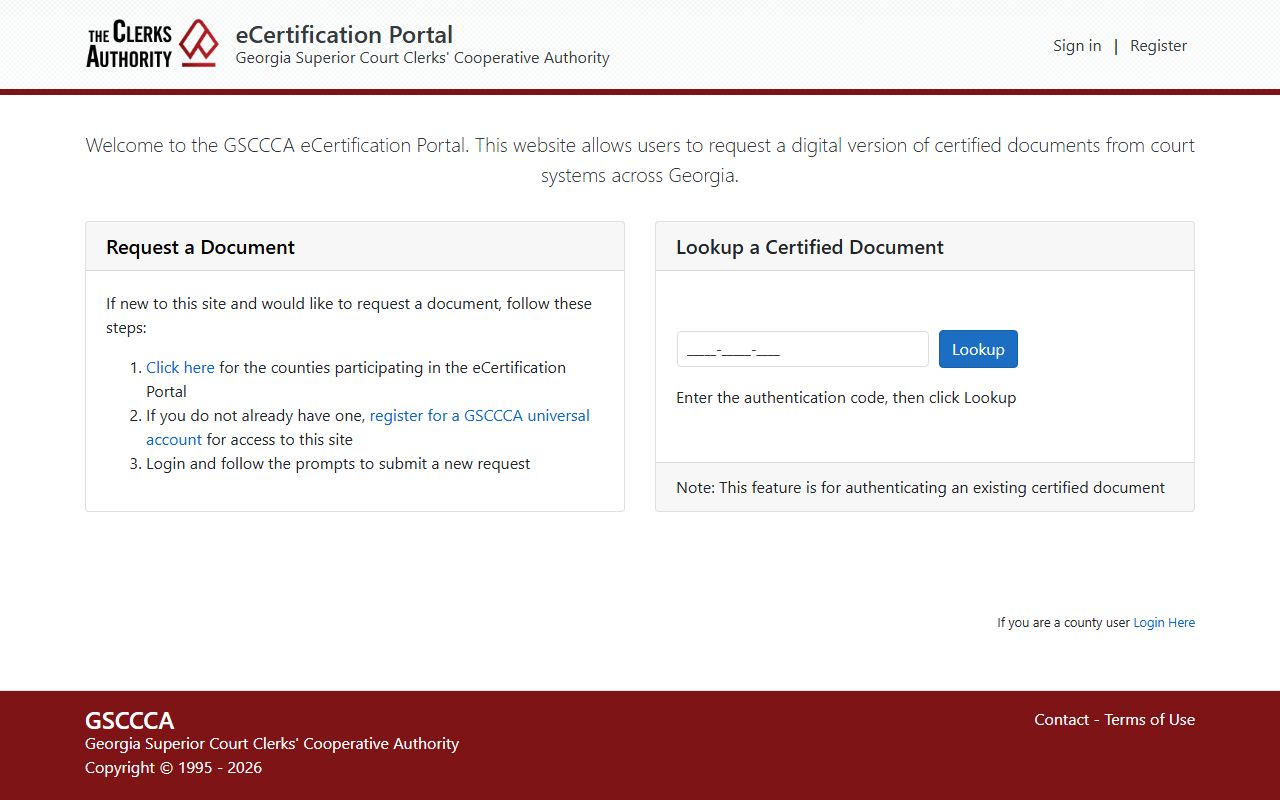
Documents available through eCertification include civil case records, real estate documents, and other court filings from Superior Court Clerks across all 159 Georgia counties.
Fines and Fees Data: CourtTRAX
CourtTRAX collects fines and fees data from every court in Georgia. Daily reports are available along with an online fee calculator. If you want to know what a court charged in a civil case or look up standard fee ranges before you file, CourtTRAX is a useful tool. It covers all Georgia courts, not just Superior Courts.
Access fines and fees data at courttrax.org.
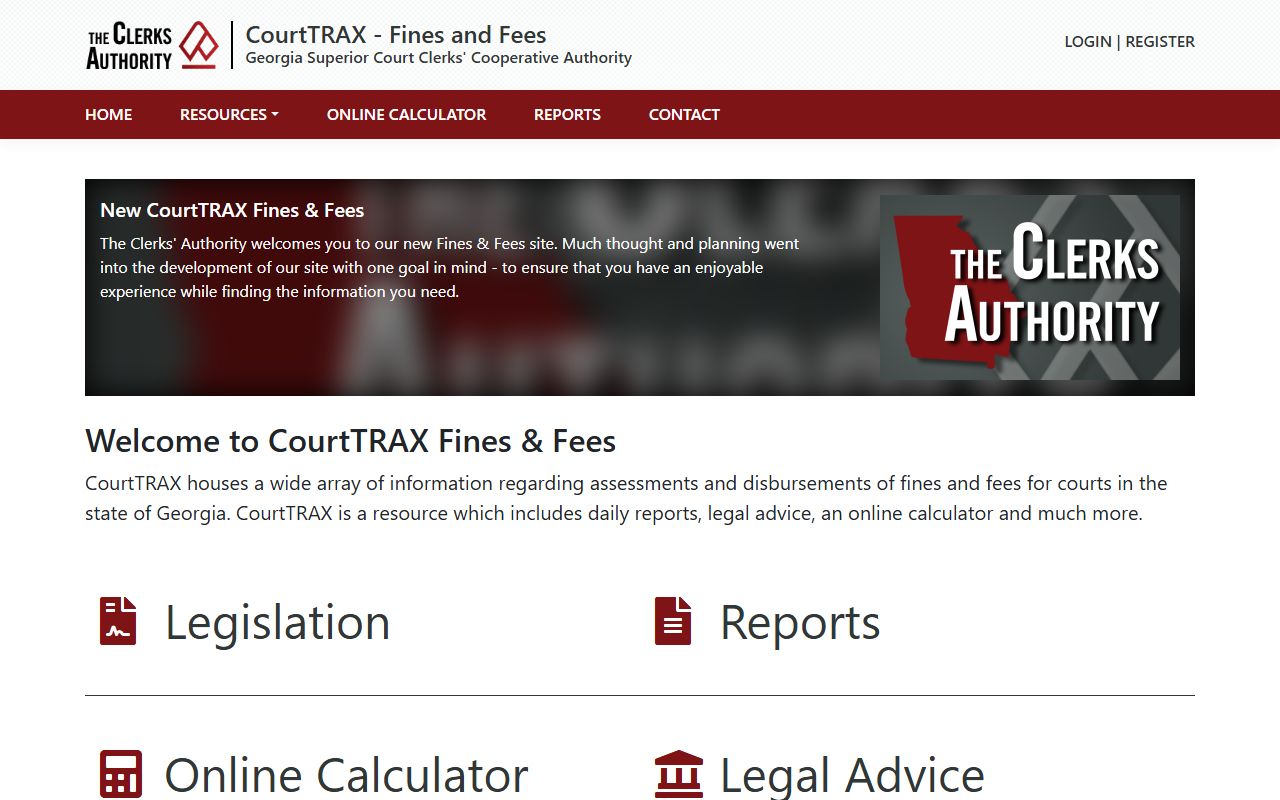
CourtTRAX also links to legal advice resources that can help you understand civil court fees before your case proceeds.
Georgia Laws Governing Civil Court Records
Georgia law is clear on public access to court records. The Uniform Superior Court Rule 21 states that all court records are public and must be available for public inspection unless a court order or state law restricts access. A judge can only limit access after a hearing, and only when the privacy interest clearly outweighs the public interest. This is a high bar. Most civil court records in Georgia stay open to anyone who asks.
Under O.C.G.A. § 15-6-94, the GSCCCA has legal authority to fix and collect fees for data, media, and services it provides. This statute is the legal foundation for how the GSCCCA manages civil court records access in Georgia. The law also grants the GSCCCA a tax exemption on property under its control.
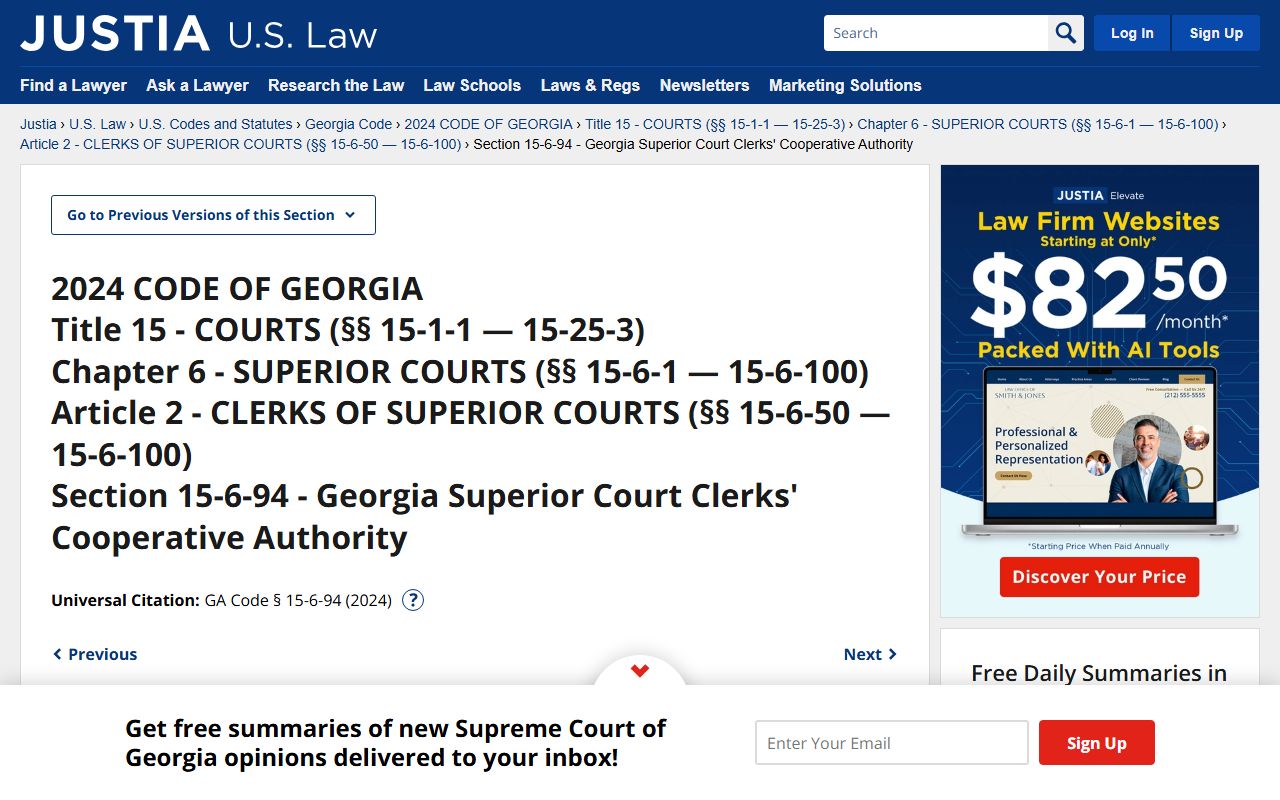
The statute text is at Justia. It outlines the purpose, powers, and limitations of the GSCCCA's role in civil court records management across Georgia.
The Georgia Open Records Act covers public access to civil court records. It appears at O.C.G.A. §§ 50-18-70 through 50-18-74. Under this law, agencies must respond to records requests within three business days. Standard copy fees run about $0.10 per page. The first 30 minutes of search and retrieval time is free. After that, reasonable rates may apply. Under O.C.G.A. § 9-11-7.1, all new civil and domestic filings must include a case filing information form. Only the last four digits of social security numbers and financial account numbers may appear in civil court filings in Georgia.
The Georgia Open Courts Compendium at rcfp.org is a thorough guide to court access rules in the state.
The compendium covers sealing procedures, access rules for different court types, and how to challenge a denial of access to civil court records in Georgia.
GSCCCA Contacts for Civil Records Help
The GSCCCA has staff dedicated to different types of civil court records questions. The Fines and Fees Division handles fee-related matters. Reach them at (404) 327-7320 or toll-free at (866) 847-4058. Email goes to Finesandfees@gsccca.org. Customer support is handled by Nicole Whitfield at Extension 1302. Rachel Rice is the Executive Director. Mike Smith manages communications and compliance at the GSCCCA.
The full staff directory is at gsccca.org/learn/who-we-are/staff-directory.
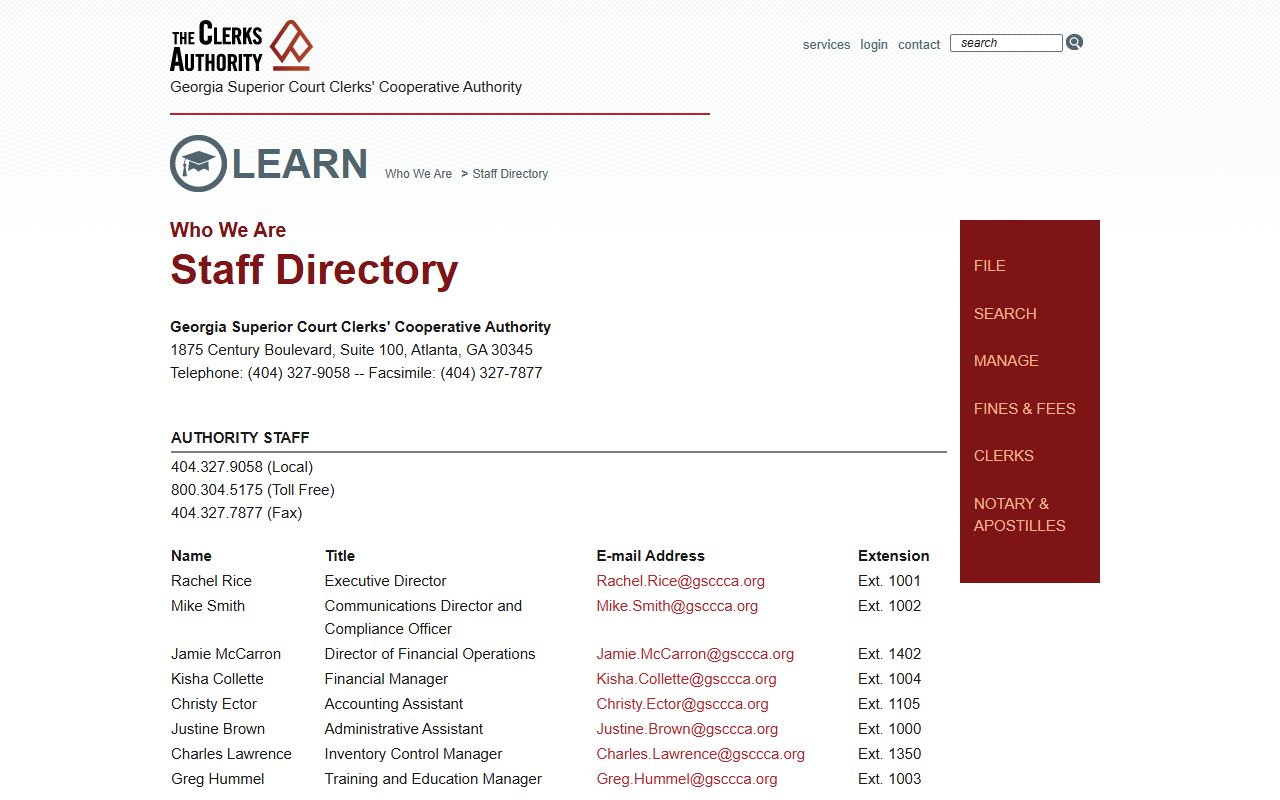
The staff directory lists extensions and email addresses for each division, making it easy to reach the right team with your civil records question.
For general contact, use the GSCCCA contact page at gsccca.org/contact.
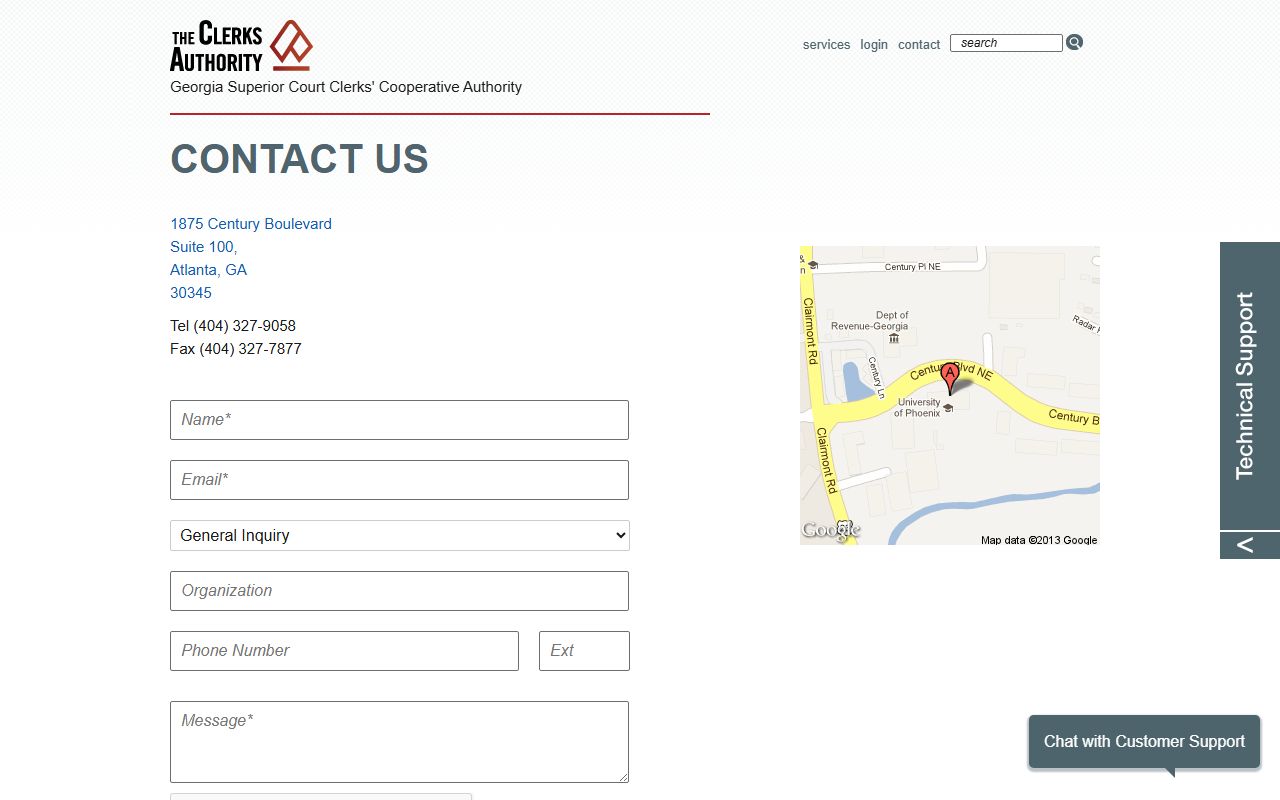
This page also lists technical support phone numbers and fax numbers for different divisions within the GSCCCA.
Training and Learning for Georgia Civil Records
The GSCCCA runs an online learning platform called eLearn. It offers training on civil court record topics, notary public courses, and the notary exam. Anyone can use it, not just clerks. If you want to learn how Georgia's court records system works, eLearn is a good place to start.
Access the eLearn platform at elearn.gsccca.org.
Courses are available anytime. No travel is required. The notary exam on this platform meets Georgia's official requirements for notary public appointment.
Municipal Courts and Georgia Civil Records
Georgia has a large network of municipal courts that handle city ordinance violations and some civil matters at the local level. These courts are separate from Superior Courts and State Courts. For civil cases of any real size, the county Superior Court is the primary venue. But municipal courts do handle smaller civil matters and create their own records in many Georgia cities.
Learn more about municipal courts at georgiacourts.gov/municipal.
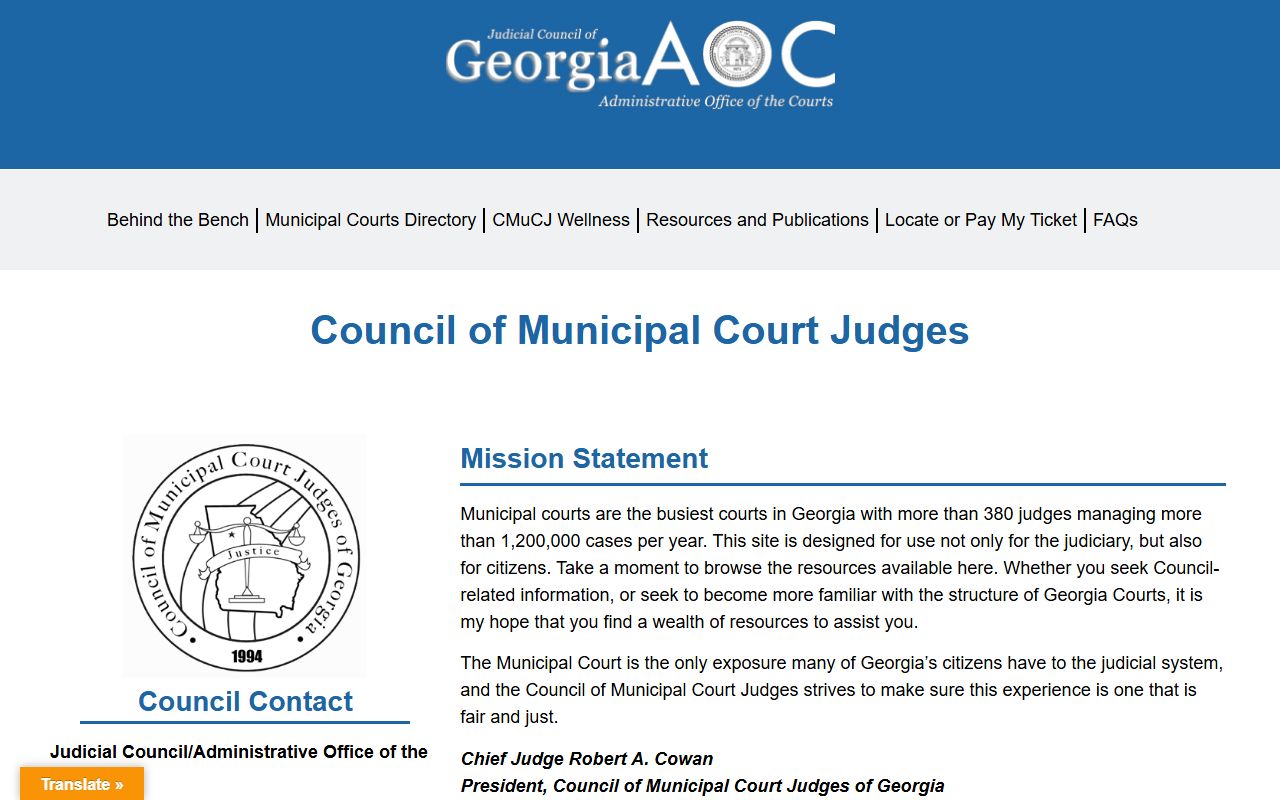
The Council of Municipal Court Judges coordinates this court system statewide. If you are unsure which court holds civil records for a case, start with the Superior Court Clerk in the county where the case was filed in Georgia.
Note: Most civil lawsuits and claims in Georgia are filed in Superior Court or State Court, not in municipal court.
Browse Georgia Civil Court Records by County
Each of Georgia's 159 counties has its own Superior Court Clerk who keeps civil court records. Pick a county below to find local contact info, search tools, and resources for civil court records in that area.
Civil Court Records in Major Georgia Cities
Residents of major Georgia cities file civil cases at their county Superior Court. Pick a city below to learn about civil court records in that area.