
Grady County Civil Court Records
Grady County civil court records are filed and maintained by the Superior Court Clerk in Cairo, Georgia. The clerk's office is the central point for all civil case filings, docket information, and public copies of court documents in Grady County. Located in southwest Georgia near the Florida state line, Grady County is part of the Southwestern Judicial Circuit. Whether you need to search for a civil judgment, find a recorded lien, or get a copy of a civil complaint filed in Grady County, the clerk's office and the statewide GSCCCA tools are your best resources.
Grady County Quick Facts
Grady County Superior Court Clerk
The Grady County Superior Court Clerk in Cairo handles all civil court records for the county's Superior Court. The clerk's office accepts civil case filings, maintains the docket, issues civil process, collects filing fees, and provides copies of civil documents to the public. If you need to file a new civil case in Grady County, check on an existing matter, or get copies of civil court documents, this office in Cairo is the place to start.
Civil cases in Grady County Superior Court cover a range of dispute types. Contract claims between businesses and individuals, property boundary conflicts, personal injury cases above the Magistrate Court threshold, civil appeals, domestic relations matters, and actions seeking equitable relief all end up at the Superior Court level. Grady County has a mix of agricultural and small business activity, and civil disputes related to agricultural contracts, property rights, and business agreements are not uncommon. The clerk keeps a complete record of every filing and court action in each civil case, from the opening complaint to the final disposition.
The Magistrate Court in Grady County handles smaller civil claims, including those under $15,000 and landlord-tenant disputes. Those records are separate from Superior Court civil records and are maintained by the Magistrate Court clerk. If your civil matter was resolved in Magistrate Court, contact that office rather than the Superior Court Clerk. Probate Court records in Grady County are also separate and not part of the Superior Court civil record system.
Search Grady County Civil Records Online
The GSCCCA provides the main online tools for civil court record access in Georgia, and Grady County is part of that statewide system. The GSCCCA homepage at gsccca.org is where you start when looking for online civil record information tied to Grady County. The GSCCCA covers recorded instruments across all 159 Georgia counties, and that includes Grady County documents going back many years.
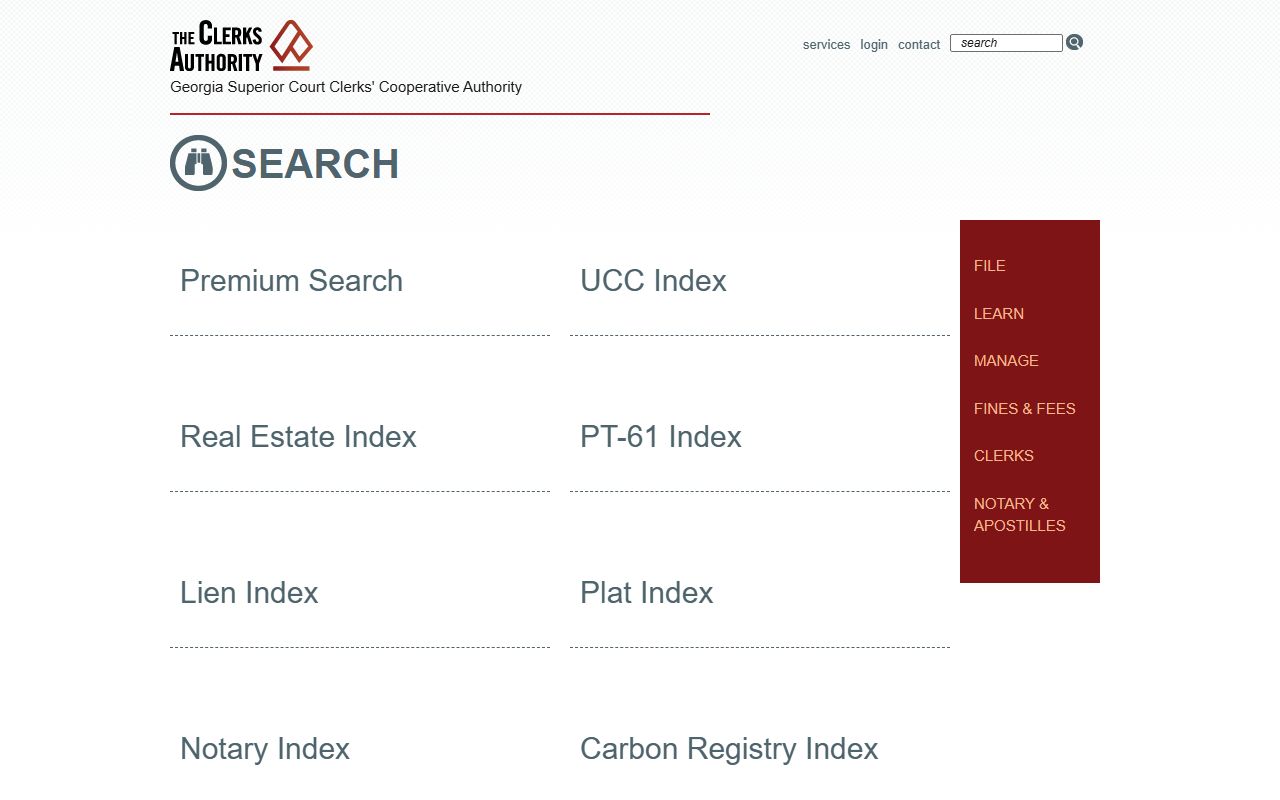
The GSCCCA search portal lets you look up recorded instruments from Grady County by party name, document type, date range, or instrument number. When a civil judgment is recorded as a lien against real property in Grady County, it appears in this database. Security deeds, mortgages, UCC filings, and other instruments connected to civil disputes are all searchable here without a trip to Cairo. Results include the filing date, instrument type, and names of the parties, which helps confirm you have found the right document.
Grady County is not currently part of the re:SearchGA statewide electronic docket system. That means full docket-level case information for Grady County civil cases is not accessible through that platform. For civil case file documents such as complaints, answers, court orders, and judgments, you need to contact the Grady County Superior Court Clerk directly. Calling or visiting the courthouse in Cairo is the most direct way to access those case-level civil records.
Note: The GSCCCA search portal is free to use. Account registration is not required for basic recorded instrument searches covering Grady County civil records.
FANS Alerts and eCertification Services
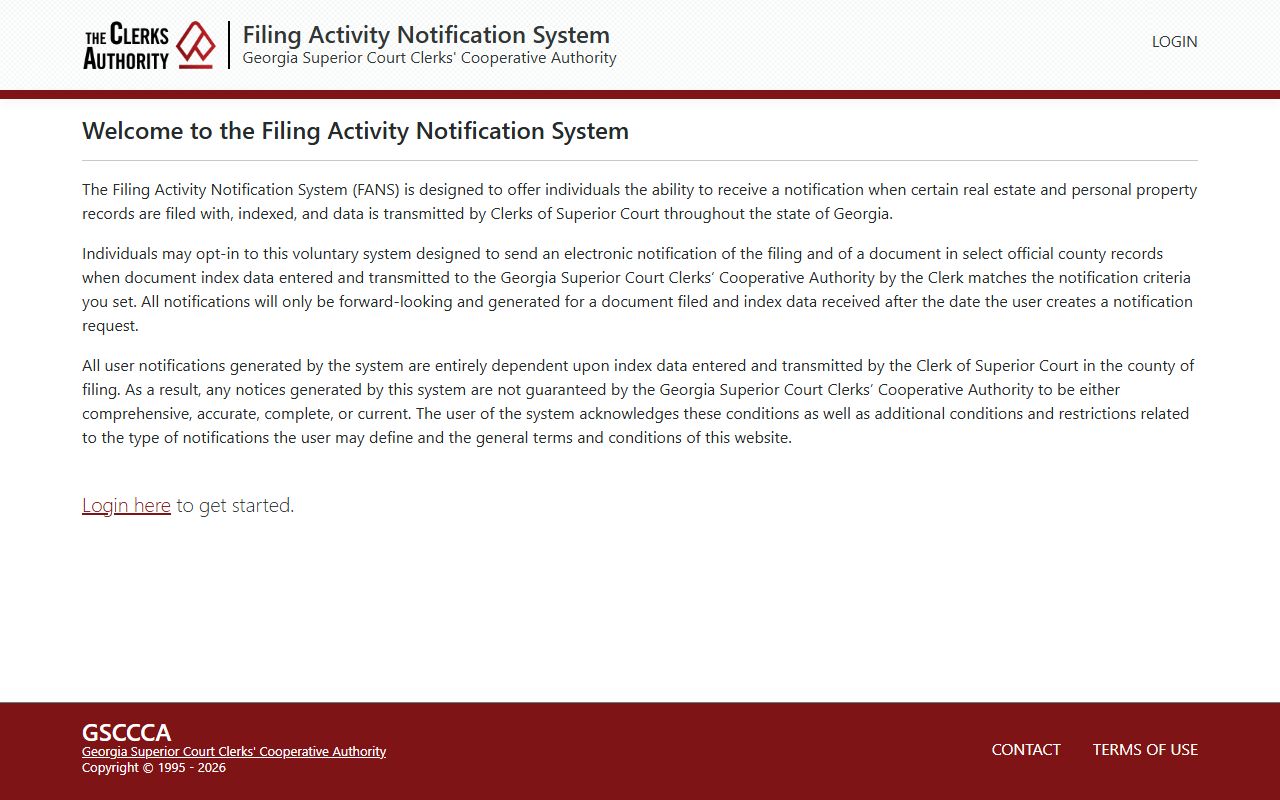
The GSCCCA Fraud Alert Notification System, or FANS, is available free to Grady County property owners at fans.gsccca.org. When you register, you receive an email alert any time a document is recorded against your property with the Grady County clerk. This covers judgment liens, unexpected deed recordings, and any other instrument filed under your property name or address. For anyone who owns real property in Grady County, FANS provides a simple way to catch unauthorized recordings early before they create bigger legal problems.
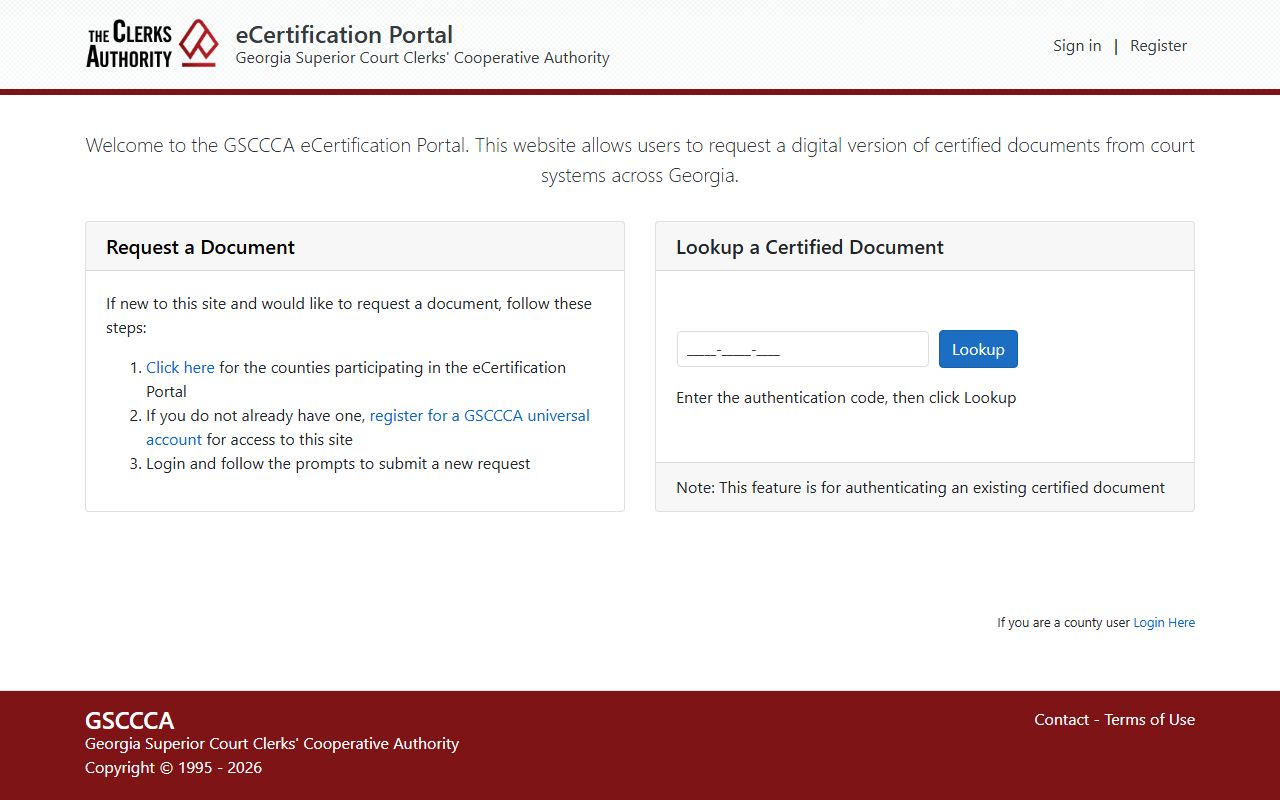
The GSCCCA eCertification portal at ecert.gsccca.org lets you order certified copies of recorded instruments from Grady County online. If you need a certified copy of a judgment lien, deed, or mortgage tied to a civil matter in Grady County for use in another legal proceeding, eCertification handles that without requiring you to go to Cairo. Certified copies produced through this system are legally valid under Georgia law and carry the same authority as copies issued at the clerk's window.
For civil case file documents, including court orders, civil complaints, and judgment entries that are part of the case record rather than recorded instruments, you must contact the Grady County Superior Court Clerk directly. The eCertification system covers only recorded instruments. Copy fees for civil case documents follow the state schedule under O.C.G.A. § 15-6-77. Contact the clerk's office in Cairo for current fees and to learn how to submit a copy request for specific civil records from Grady County.
Open Records and Civil Record Access in Grady County
Civil court records in Grady County are public records. Georgia's Open Records Act at O.C.G.A. § 50-18-70 gives any person the right to inspect and copy records held by government agencies, including the Grady County Superior Court Clerk. Civil case filings, judgments, court orders, and docket entries are all open to the public in the absence of a specific court order sealing the records. Routine requests for civil case documents from Grady County are handled by the clerk without significant delay in most cases.
The clerk is required by O.C.G.A. § 15-6-61 to maintain a proper docket of all civil and criminal cases filed in Superior Court. That docket is a public record and must be available for inspection. If you want to find out whether a civil case exists in Grady County for a particular party, or check the current status of a pending matter, the docket is where you find that information. You can request to review the docket in person at the Cairo courthouse during regular business hours.
To request civil court records from Grady County, visit the courthouse in Cairo, call the clerk's office, or send a written request by mail. Under the Open Records Act, the clerk must respond within three business days. If the records exist and are not exempt, you are entitled to inspect them or receive copies. Fees apply for copies under state law. The clerk can walk you through what is available and what it costs to get the specific civil records you need from Grady County Superior Court.
Civil E-Filing in Grady County
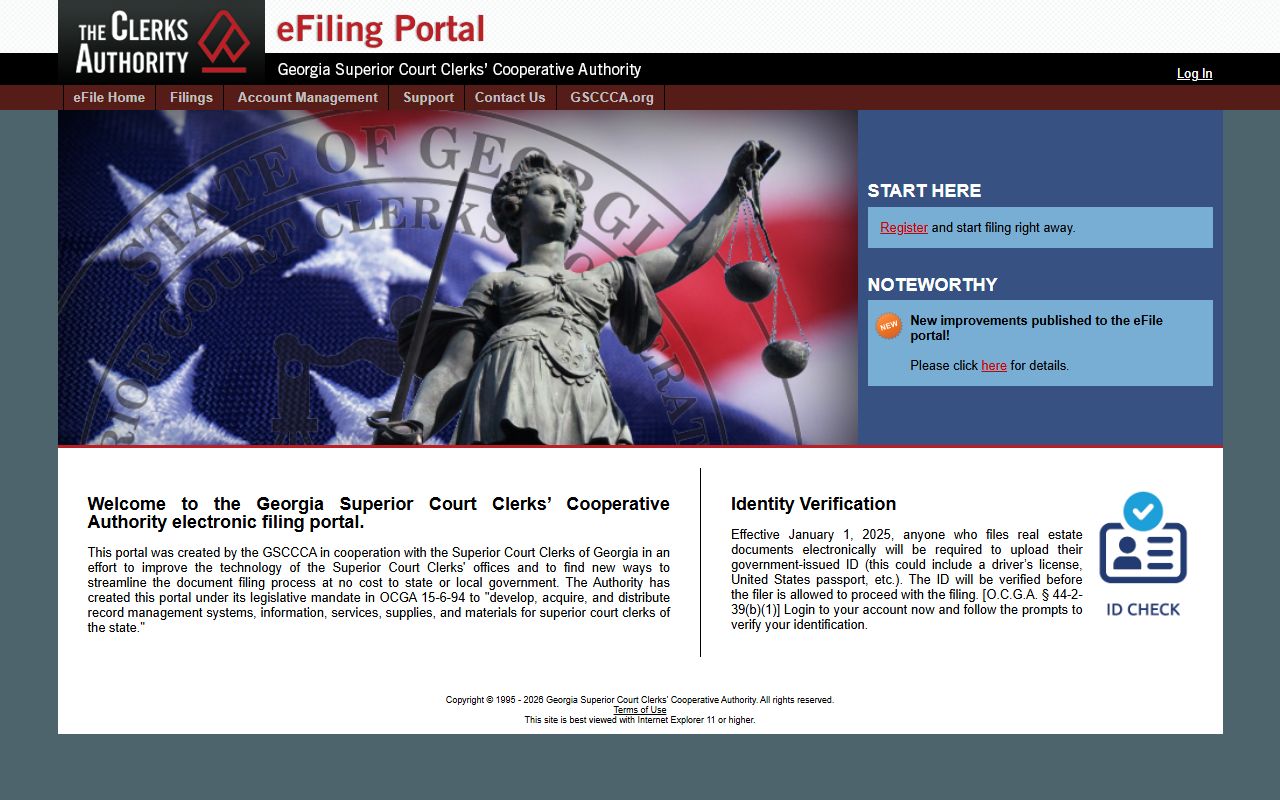
Attorneys filing civil documents in Grady County Superior Court are required to submit them electronically through the GSCCCA e-filing platform at efile.gsccca.org. This system is the standard channel for electronic civil filings in all Georgia Superior Courts. Filings submitted through the platform go directly to the Grady County clerk and are treated the same as paper filings received in person. The electronic filing requirement covers civil complaints, motions, discovery submissions, and other pleadings in Superior Court cases.
Self-represented litigants who are not attorneys can still file civil documents in paper form at the Grady County courthouse in Cairo. The clerk's office accepts paper filings at the counter during business hours. If you need to file a civil case without an attorney in Grady County, going to the courthouse in person is the most reliable approach. Bring your completed forms, the required filing fee, and copies for your records. The clerk will assign a case number and process your filing.
An overview of how the Georgia Superior Court e-filing system works is available at gsccca.org/file/efiling/overview. This resource covers what document types can be submitted electronically in Grady County, how attorneys set up accounts, and what happens after a filing is submitted to the clerk. It also explains the confirmation process and what attorneys should do if a filing is rejected or returned for correction.
Nearby Counties
Grady County sits in southwest Georgia and shares borders with several counties in the Southwestern Circuit and nearby circuits. Civil cases must be filed in the county where the dispute arose or where the defendant resides, so checking neighboring county records can help confirm where to look.