
Cook County Civil Court Records
Cook County civil court records are filed and maintained by the Superior Court Clerk in Adel, Georgia. The clerk's office handles civil complaints, motions, judgments, and recorded property documents for the county. Civil cases in Cook County go through the Superior Court, which is part of the Alapaha Judicial Circuit. The GSCCCA statewide portal provides public access to recorded civil instruments from Cook County, and the FANS notification system is available to property owners who want alerts when new documents are recorded against their land in the county.
Cook County Quick Facts
Cook County Superior Court Clerk
The Cook County Superior Court Clerk in Adel is the central point for civil court records in the county. The office files new civil cases, maintains the official docket, and stores all court documents for active and closed civil cases. Types of civil matters handled through this office include contract disputes, real property actions, personal injury claims, civil judgment enforcement, and domestic relations cases such as divorce and custody. Every civil case in Cook County Superior Court goes through this clerk's office from initial filing through final resolution.
The clerk also records land records for Cook County. This includes security deeds, warranty deeds, quitclaim deeds, lis pendens filings, and civil judgment liens. When a court issues a civil judgment in a case, the winning party can record that judgment as a lien against the losing party's real property in Cook County. That recorded lien then appears in both the case file and the clerk's property record system, which feeds into the GSCCCA statewide database.
Cook County is part of the Alapaha Judicial Circuit along with several neighboring south Georgia counties. Judges rotate through the circuit on a scheduled basis, hearing civil cases in Adel when the circuit docket brings them to Cook County. Civil cases that require hearings may have longer wait times than in urban counties with resident judges. The clerk's office can tell you when the next scheduled court dates are for civil matters in Cook County.
Note: Cook County does not have a local online case search portal. The GSCCCA system covers recorded civil documents, while direct inquiries to the clerk handle case-level records.
Online Civil Record Search for Cook County
The Georgia Superior Court Clerks' Cooperative Authority provides a free, public online search for recorded civil documents in Cook County and every other Georgia county. Access the search at gsccca.org/search. From there, select Cook County and search by party name, document type, or date range. The system returns recorded instruments such as civil judgment liens, security deeds, UCC fixture filings, and other documents submitted by the Cook County clerk to the statewide index.
For civil judgment research specifically, the GSCCCA search is an important first step. If a judgment was entered in a Cook County civil case and recorded as a lien, it will show up here under the judgment debtor's name. This can confirm whether a person has outstanding civil judgments against their property in Cook County before you enter into a contract, real estate transaction, or other financial arrangement with them.
The eFiling overview shown below is one part of the GSCCCA system, giving context on how civil filings move through Georgia's court infrastructure and how those records eventually become searchable in the statewide database.
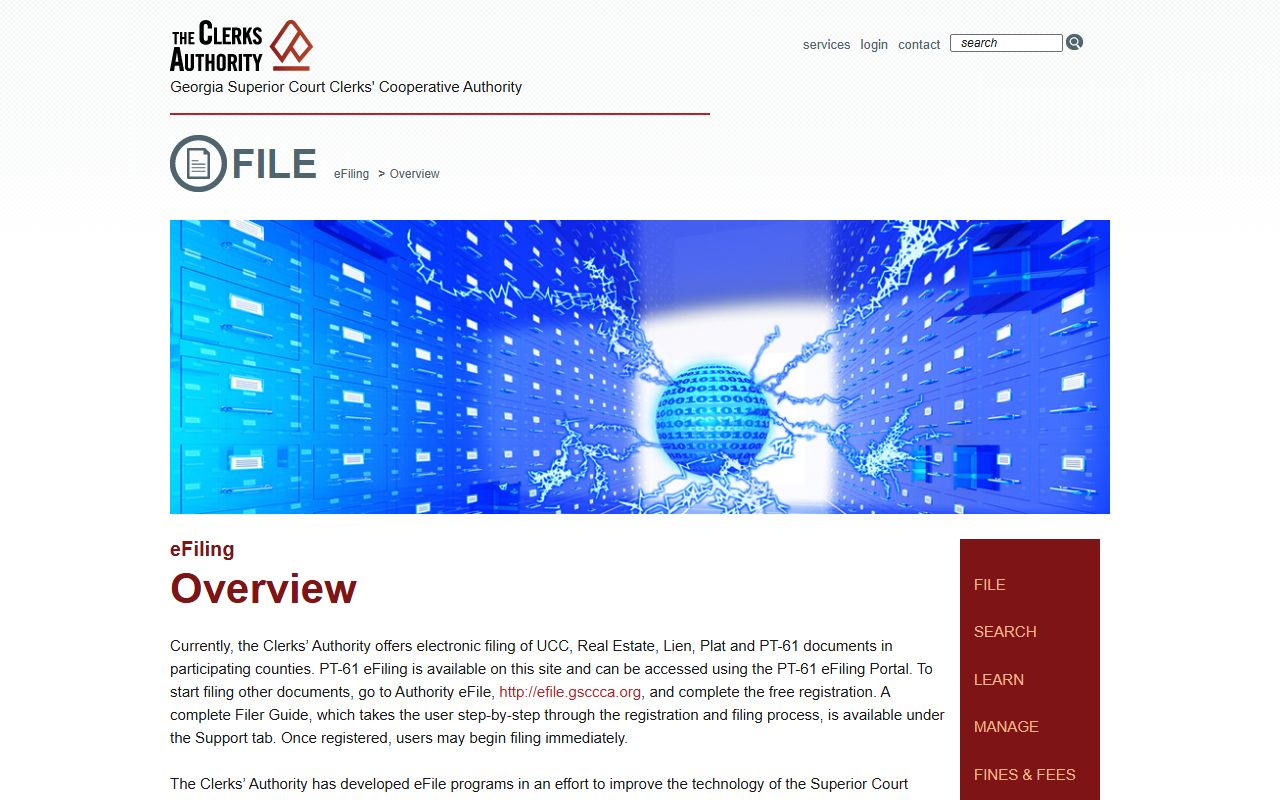
The full GSCCCA portal at gsccca.org is the official gateway to Cook County recorded civil documents. Searches are free. Document image fees may apply depending on the document type and year. Use the portal to verify what is on record before contacting the clerk for certified copies or full case files.
Property Alerts and Certified Copies
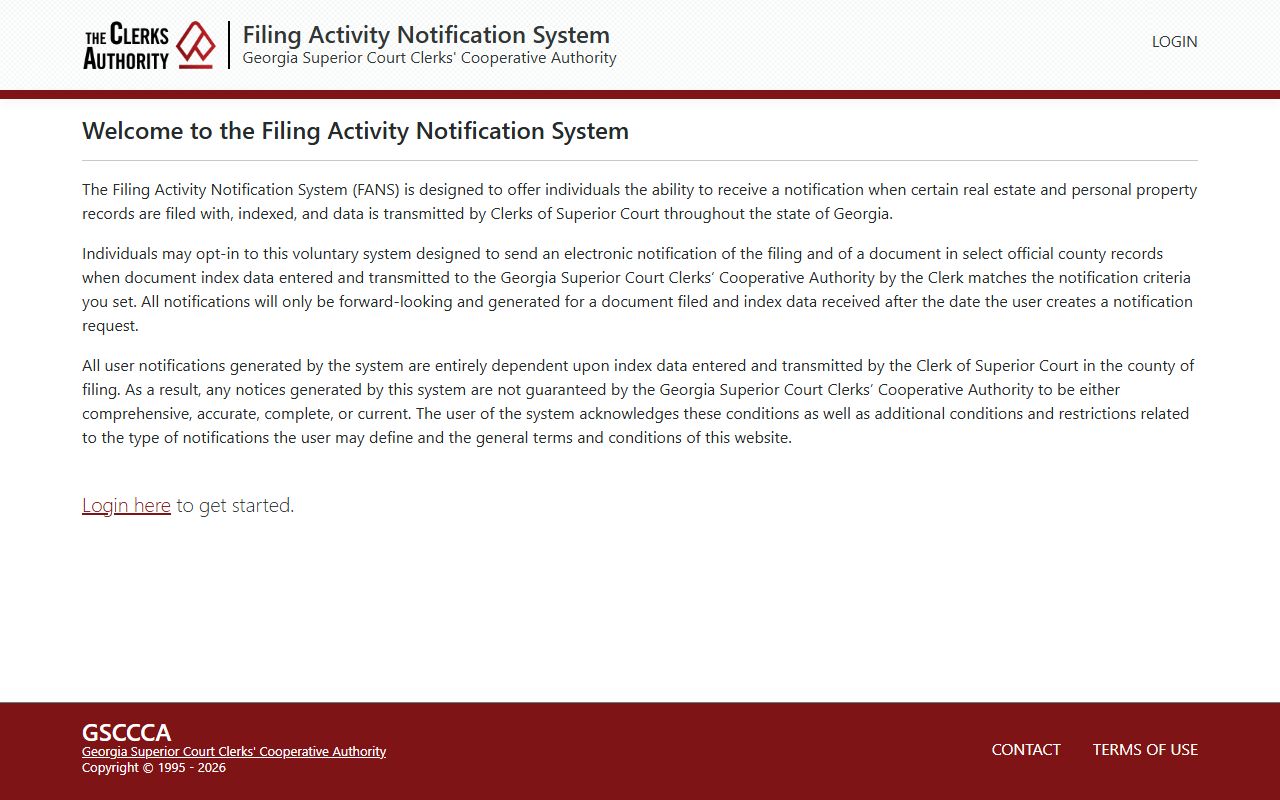
Cook County property owners can sign up for Georgia's FANS service at fans.gsccca.org. FANS sends a free alert any time a document is recorded against your registered property in the GSCCCA system. For property owners in Adel and elsewhere in Cook County, this is a useful tool for catching unauthorized liens, fraudulent deed filings, and recorded civil judgments that affect real estate. The service is free and the alert is sent by email or text message as soon as a new document is indexed.
If you need a certified copy of a recorded civil document from Cook County, the eCertification portal at ecert.gsccca.org lets you order it online. You find the document through the GSCCCA search, select it, and request a certified copy. The portal handles the order, payment, and mailing. Certified copies are stamped with the Cook County clerk's seal and are accepted as legal proof of the recorded document's contents.
For civil case documents that were not separately recorded -- court orders, pleadings, motions, and the like -- you must contact the Cook County clerk in Adel to get certified copies. These are not available through eCertification because they are part of the case file rather than the recorded instruments database.
In-Person Access to Cook County Civil Records
The Cook County courthouse in Adel is open to the public during normal business hours. You can visit the clerk's office to review civil case files, request a docket search by name or case number, and get copies of specific documents. Bring the names of the parties or a case number if you have it. The clerk's staff can search the index and pull documents from storage for your review.
Georgia law sets a standard public records copy fee of $0.10 per page for plain copies. For civil court records in Cook County, this fee applies when you request paper copies of documents from the case file. Certified copies cost more. If you need a certified copy of a final judgment, court order, or other civil court document from Cook County, ask the clerk for the current fee before requesting a large number of pages.
The Georgia Open Records Act at O.C.G.A. § 50-18-70 gives anyone the right to inspect public records, including civil court records in Cook County. The clerk must acknowledge a written request within three business days. Sealed records, juvenile files, and documents restricted by judicial order are the main exceptions to public access. Most civil court filings are fully open to the public.
Civil Documents Held by the Cook County Clerk
The Cook County Superior Court Clerk maintains a broad set of civil court records. Case files contain the civil complaint that started the lawsuit, the summons served on the defendant, the defendant's answer, all motions and supporting documents filed by either side, hearing notices, court orders, and the final judgment. When an appeal is filed, additional appellate documents join the case file. These records stay with the clerk indefinitely and are part of the public record for Cook County civil litigation.
Beyond active case files, the clerk also holds land records that intersect with civil court outcomes. A recorded civil judgment becomes a lien on real property in Cook County. Security deeds filed when a loan is made on property become part of the county's land record. Deeds of any type -- warranty, quitclaim, limited warranty -- pass through the clerk's recording function. Each of these recorded instruments is indexed and searchable in the GSCCCA system.
The FANS registry screenshot below shows how Georgia's property alert system integrates with the recorded documents database to help property owners monitor civil-related filings in Cook County.
Both the case file records and the recorded instrument records are part of what makes up the full civil court records landscape in Cook County. Use GSCCCA for the recorded side, and reach the clerk directly for the litigation side.
Nearby Counties
Cook County is in south Georgia. Civil cases must be filed where the defendant lives or where the dispute arose. These neighboring counties all have Superior Court clerks that maintain their own civil court records.